
The Complete Guide to Finding Your Next Home in the Capital: How to Do It Right
By Jacki Wiluzanski · · Updated · 8 min read
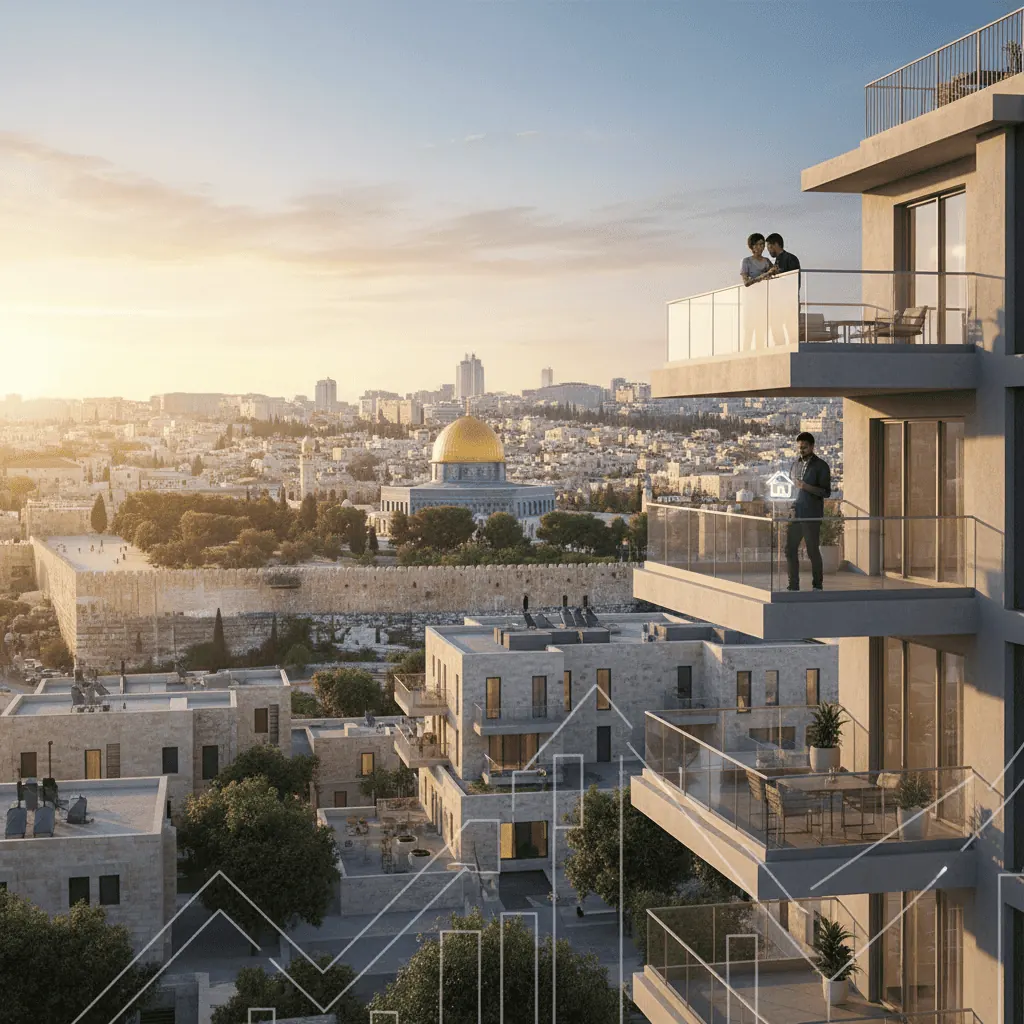
Jerusalem is not just another city on the map. It is a world unto itself, a fascinating blend of ancient history and lively modern life, of picturesque stone alleys and brand-new luxury towers. For many people, moving to the capital is a dream come true, but the road to finding the perfect property can be challenging. The local real estate market is highly dynamic, with strong demand and a very varied supply, which calls for deep understanding and patience. Whether you are students looking for a shared apartment in Nachlaot, a family who wants a spacious home in Katamon, or a young couple dreaming of an apartment in Rehavia, the following guide will bring some order to the chaos.
At J&G Real Estate Group, we understand that a home is much more than four walls. It is where memories are made, where the family gathers and where you feel safest. So we have gathered the most important insights to help you navigate the Jerusalem market wisely, avoid common pitfalls and find the place you can wholeheartedly call "home".
Why Is the Housing Market in the Capital Different from Anywhere Else?
Real estate in Jerusalem is unique on a global scale, and not only because of its holiness and history. The city's topography, its diverse demographic makeup and the strict municipal rules on preserving buildings create a real estate mosaic with no equal. Unlike the flat cities of central Israel, in Jerusalem every neighborhood, and sometimes every street, has a completely different character.
One of the most prominent features is building in Jerusalem stone. A long-standing municipal bylaw requires stone cladding on every building, which gives the city its uniform and enchanting look. However, for the prospective tenant, this feature has practical implications. Old stone buildings tend to be cool in summer but require significant heating in Jerusalem's cold winter. Thermal insulation is a critical issue to examine in every property, especially in buildings designated for preservation or in ground-floor apartments.
In addition, demand in Jerusalem is affected by seasonal and sector-specific factors. The summer months are especially busy because of students moving ahead of the academic year at the Hebrew University and the colleges, alongside families using the summer break to move. At the same time, there is a large population of overseas residents who own properties ("ghost apartments") and come only for the holidays, which affects supply and prices in certain areas such as Mamilla and Rehavia.
Mapping the Neighborhoods: How to Choose the Right Area for You
Choosing a neighborhood in Jerusalem is choosing a way of life. Every area has its own community, services and atmosphere. Here is a short review to help you focus:
- Rehavia and Talbiya: The classic, prestigious neighborhoods. They are characterized by green streets and proximity to the city center and cultural institutions. Suited to established families and diplomats, but prices reflect this.
- Nachlaot and the city center: The beating heart of Jerusalem. Dense alleys, proximity to the Mahane Yehuda market and lively nightlife. The area is preferred by young people, students and artists looking for a bohemian atmosphere.
- Old Katamon and the German Colony: A combination of history and bourgeois charm. Beautiful Arab stone houses, quality cafes and a large English-speaking population. A highly sought-after area for quiet living close to everything.
- Beit HaKerem and Ramat Beit HaKerem: Quality neighborhoods with a strong community character, combining new and old construction. Excellent access thanks to the light rail and Begin Boulevard, popular among families and medical students (because of the proximity to Hadassah).
- Arnona and Talpiot: Developing areas offering newer and more spacious apartments at relatively more accessible prices compared with the center, with spectacular views of the Old City or the Judean Desert.
Finding Properties in a Competitive Market: How to Do It Right
Competition for good apartments in Jerusalem can be fierce. Quality properties at a fair price are sometimes snapped up within a few hours of being posted. To succeed, you need to be focused and quick. Set your maximum budget in advance, including associated expenses such as property tax (Arnona, which is among the highest in the country) and building committee fees.
One common mistake is relying exclusively on free online boards. While they are a useful tool, the best properties often never appear there at all, but pass by word of mouth or are held exclusively by brokers. When you are looking for apartments for rent in Jerusalem, working with an established local brokerage can save you valuable time and frustration. A broker who knows the area will know how to point you to properties that are about to become vacant even before they reach the wider market.
A Pro Tip
In Jerusalem, parking is critical. In the old quarters such as Nachlaot or the city center, private parking is a rare and extremely valuable commodity. If you own a car, check whether the property is eligible for a regional parking permit from the municipality. In some areas, even a regional permit does not guarantee finding parking in the evening, so it is worth considering alternative transportation solutions such as the light rail.
Mandatory Checks in a Jerusalem Property
Found an apartment that looks perfect? Just before signing, there are several specific checks you must carry out, especially in typical Jerusalem buildings:
Dampness and waterproofing: Jerusalem stone houses, especially on ground floors or garden levels, are prone to dampness problems ("capillary" damp) rising from the ground. Look for signs of mold in corners, peeling paint at the bottom of the walls or a musty smell in basements. These problems tend to get significantly worse in winter.
Heating system: Winter in Jerusalem is very cold. Check which heating system the property has. Central heating is efficient but can be very expensive in building committee payments. Underfloor heating is a wonderful luxury in new apartments, while in many old apartments people rely on air conditioners (make sure they work and are sufficient to heat a large space) or gas heaters (Junkers), which are efficient and pleasant.
Water pressure and plumbing: In older buildings in neighborhoods such as Rassco or Katamon, the plumbing may be old. Open the taps and check the water flow, including the hot water. Make sure there is a working solar water heater - in Jerusalem the sun shines even in winter, and a solar water heater is a significant saving on electricity.
The Lease: What Not to Compromise On
A fair lease is the basis of a healthy relationship with the landlord. Beyond the standard clauses of price and lease period, pay attention to the following:
- Option to extend: Try to anchor in the lease an option for another year at a price known in advance or with a limited increase. This will give you security and stability.
- Repairs and maintenance: Clearly define who is responsible for fixing faults in the apartment's systems (air conditioner, water heater, plumbing). The rule is that any reasonable wear and tear falls on the landlord, and malicious damage on the tenant.
- Exit clause: Life is dynamic. Make sure you have the option to end the lease early with reasonable notice (for example 60 days) and by bringing a replacement tenant.
Why Choose J&G Real Estate Group?
The J&G Real Estate Group brokerage is not just another real estate office. We see ourselves as partners on your journey. Our deep familiarity with every stone and alley in Jerusalem lets us match each client with the exact property for their needs and budget. Our professional team accompanies you from the needs-definition stage, through property tours, to the negotiation and contract signing.
We believe in full transparency. With us you will get all the information about the property, with no surprises and no "fine print". In addition to brokerage services, we offer property management services that provide peace of mind to both landlords and tenants, with ongoing maintenance and a fast response to any problem. When you choose J&G Real Estate Group, you choose a warm and professional home that will look after your interests in the capital's complex real estate market.
Frequently Asked Questions
Do rental prices in Jerusalem include property tax (Arnona)?
In the vast majority of cases, the advertised price is the rent only (a "bare" rent). Property tax (Arnona), building committee fees and ongoing bills (electricity, water, gas) are paid separately by the tenant. It is important to check the Arnona amount in advance, since it varies significantly between neighborhoods and apartment sizes.
How far in advance should I start looking for an apartment?
We recommend starting the search about one to two months before the desired move-in date. Searching too early may not be relevant since good apartments are rented quickly, and searching too late may leave you with thin supply and time pressure. In peak periods (July-August) the market is very fast and it is recommended to be available to see apartments immediately.
Is it mandatory to use a broker?
It is not mandatory, but it is highly recommended. A professional broker saves you time by screening out irrelevant properties, gives access to properties that are not advertised online, and helps manage a professional negotiation with the landlord. At J&G Real Estate Group we would be glad to guide you through the process and find your next home.
What guarantees are usually required?
The accepted standard in Jerusalem usually includes two good guarantors (with pay slips), a security check or a promissory note. In luxury apartments or properties managed by companies, a bank guarantee equal to 3 months' rent is sometimes required. We recommend preparing the relevant documents in advance so as not to delay the signing.