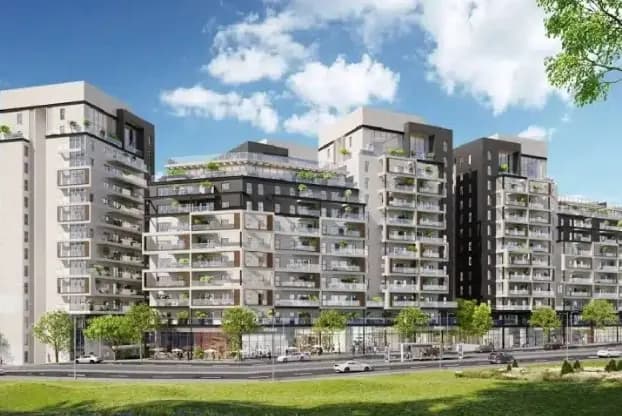

A New Neighborhood in Jerusalem With 3,500 Homes
By Jacki Wiluzanski · · Updated · 2 min read

The Jerusalem District Planning and Building Committee, chaired by Shira Talmi-Babai, decided to approve a plan for the establishment of an urban district that would combine residences, hotels, employment and commercial areas with public buildings and open spaces, on Derech Hebron in Jerusalem, which serves as the axis of the light rail (the Blue Line).
The plan, on an area of approximately 120 dunams, includes 3,500 homes to be built in buildings of 8 to 50 stories. Of all the homes, 700 will be allocated to small apartments (with an area of up to 55 square meters) and 1,050 to apartments for rent for a period of 10 years.
In addition to the housing units, the plan includes 1,300 hotel rooms, approximately 50,000 square meters of commercial space that will be established as a continuous commercial frontage along Hebron Road and near the light rail stations, 65,000 square meters for commercial and employment space, six new schools, a sports center that will also include a swimming pool, as well as 52 daycare centers and synagogues and community areas that will be integrated into the residential buildings, and 35 dunams of open spaces integrated with the remains of antiquity that will be designated for preservation. The plan is an initiative of the company Tidhar and was prepared by the firm Yigal Levy Architects.
Shira Talmi-Babai, chair of the Jerusalem District Planning and Building Committee: "Hebron Road is a historic axis that connects Bethlehem and Jerusalem. At this time, following the light rail policy, the axis returns to its historic status and becomes a central place in the development of Jerusalem. The plan creates an excellent public space where five schools will be built, a spectacular antiquities complex, gardens, a promenade, thousands of homes, rental housing, hotels and employment. This is a plan that optimally expresses the district committee's policy for renewing the city center and building along the light rail routes, in order to preserve open spaces and young couples in the city."
Jerusalem District Planner at the Planning Administration, Dan Keinan: "The plan is a practical realization of the district committee's development vision to densify the built fabric and improve the public space, in particular near public transportation hubs. This is in order to improve the quality of urban life in Jerusalem and meet the demand for housing in the city, while avoiding building in open areas as much as possible. This is a plan that optimizes the use of existing infrastructure, increases the mix of uses in the urban fabric, and will contribute greatly to the development of the southern area of the city."